
The thickness of packing tape affects not only adhesion but also load-bearing capacity and transport safety. Choosing tape is about product structure, not simply “the thicker, the better.”
1. What Determines Tape Thickness?
Packing tape consists of two main layers:
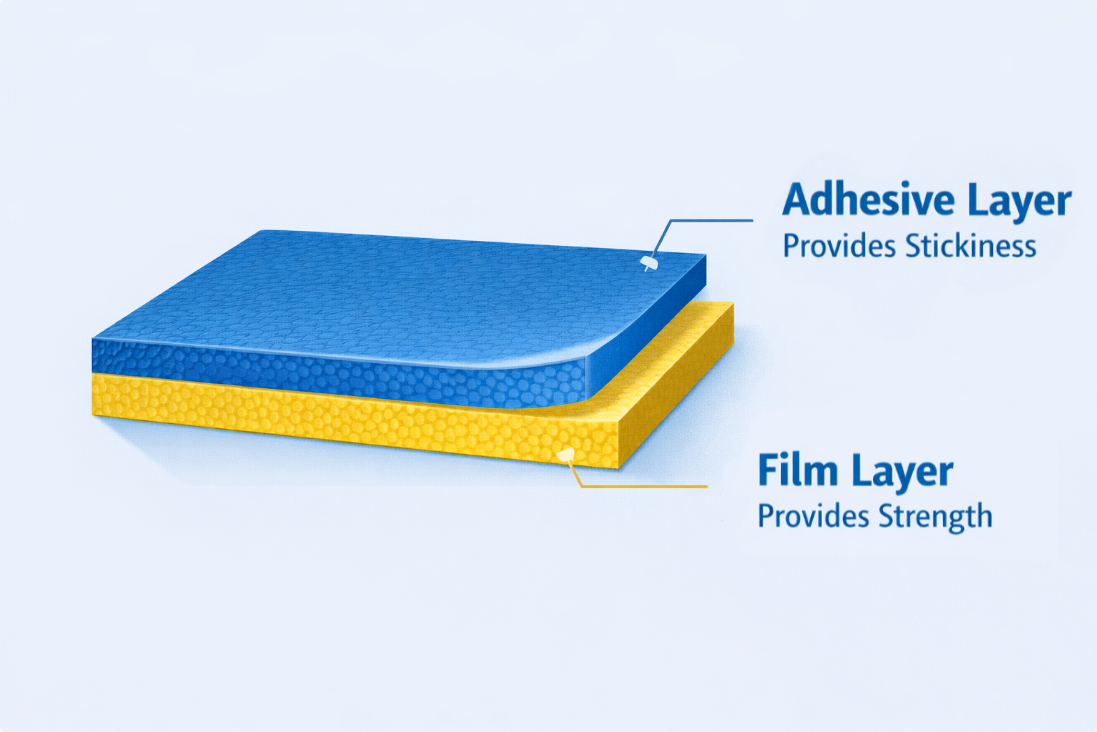
Film layer: Provides strength and tensile performance
Adhesive layer: Provides stickiness and bonding performance
Actual performance depends on the balance between film and adhesive, not just total thickness.
2. Film & Adhesive Matching Principles
As total tape thickness increases, the film layer becomes thicker to improve strength, while adhesive is adjusted to maintain bonding performance.
Key control rules:
Adhesive is usually 2–3μm thinner than the film
Adhesive coating is usually ≥10μm to ensure sufficient adhesion
Excessive adhesive (over 30μm) may affect stability
A proper ratio ensures balance between adhesion, strength, and durability.
3. Thickness vs. Key Performance Indicators
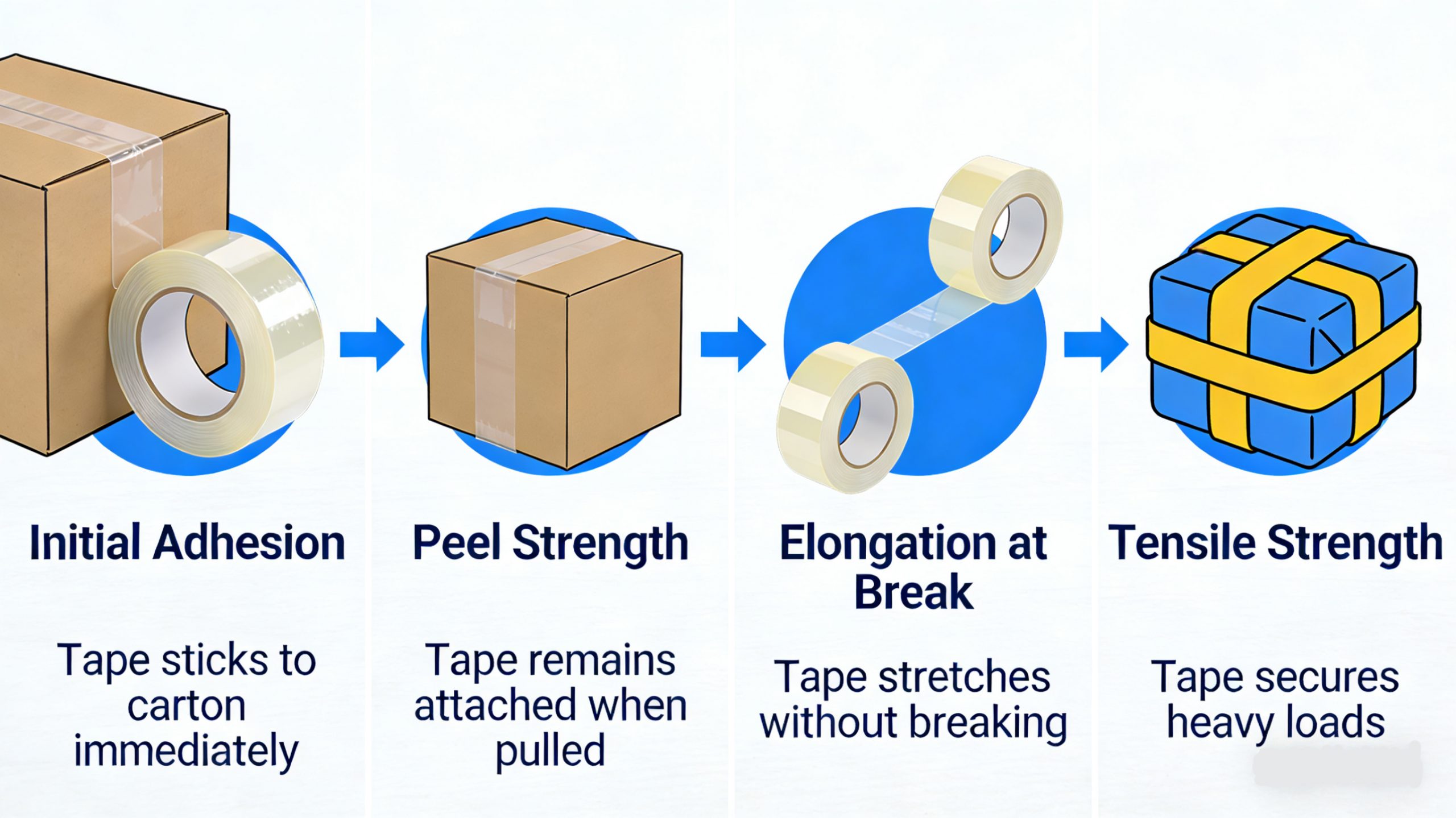
Tape thickness affects several physical properties, which directly influence real-life usage.
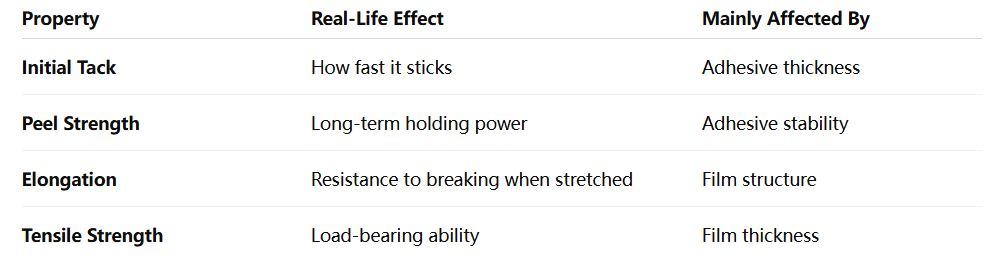
In simple terms:
- Initial Tack = Sticks fast
- Peel Strength = Holds long
- Elongation = Hard to break when stretched
- Tensile Strength = Can hold weight
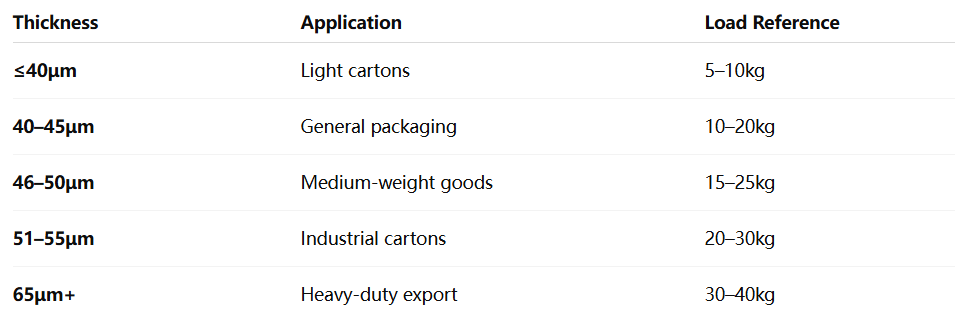
4. Recommended Thickness by Application
Tape performance depends on proper structure, not just thickness.
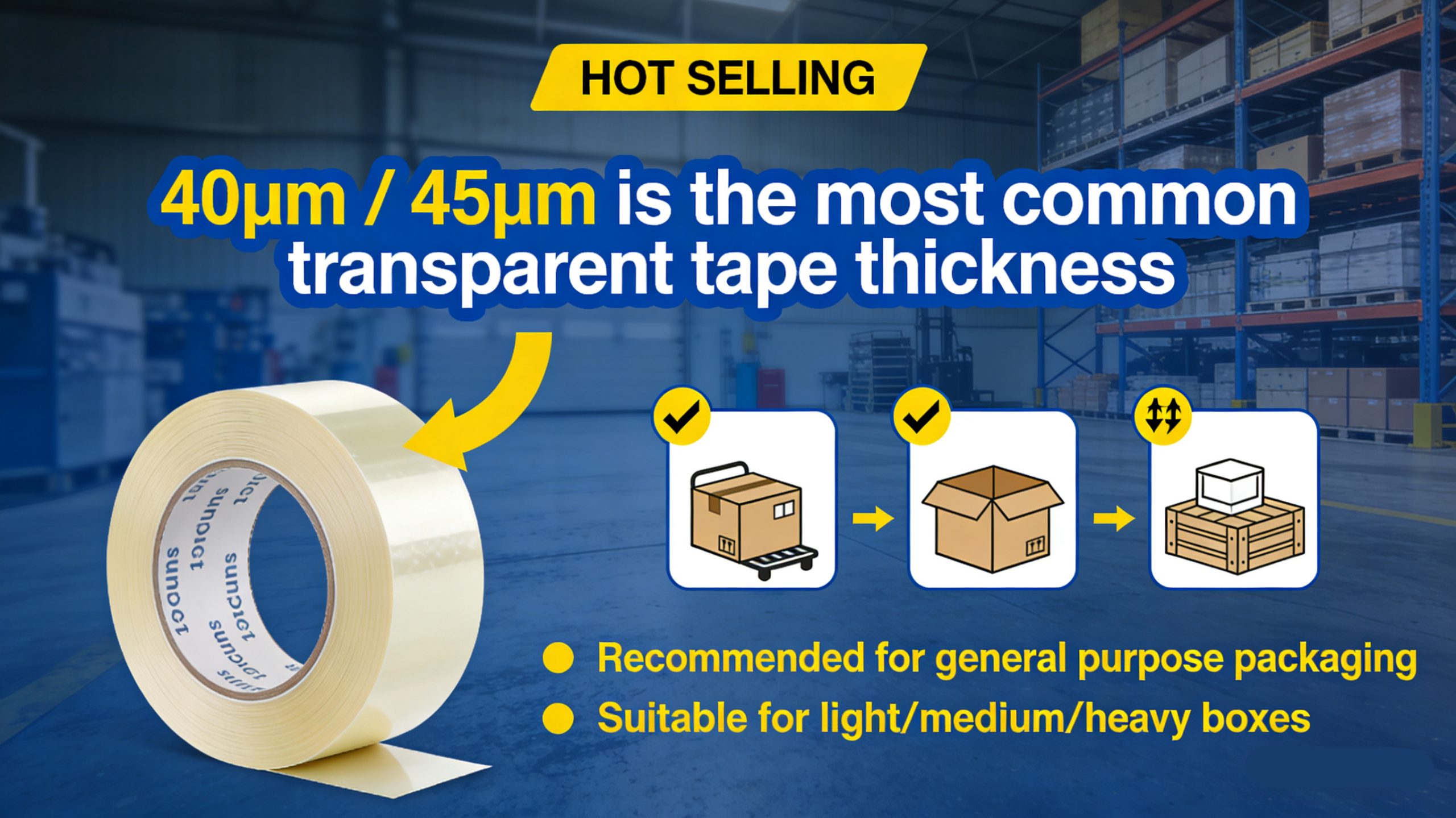
If you’re unsure which thickness to choose, share your packaging application with us. Based on experience, 40μm and 45μm are the most popular and versatile options for most packaging needs.